What We Cooked in November 2025 (How I Meal Planned for a Family of 5 Without Losing My Mind)
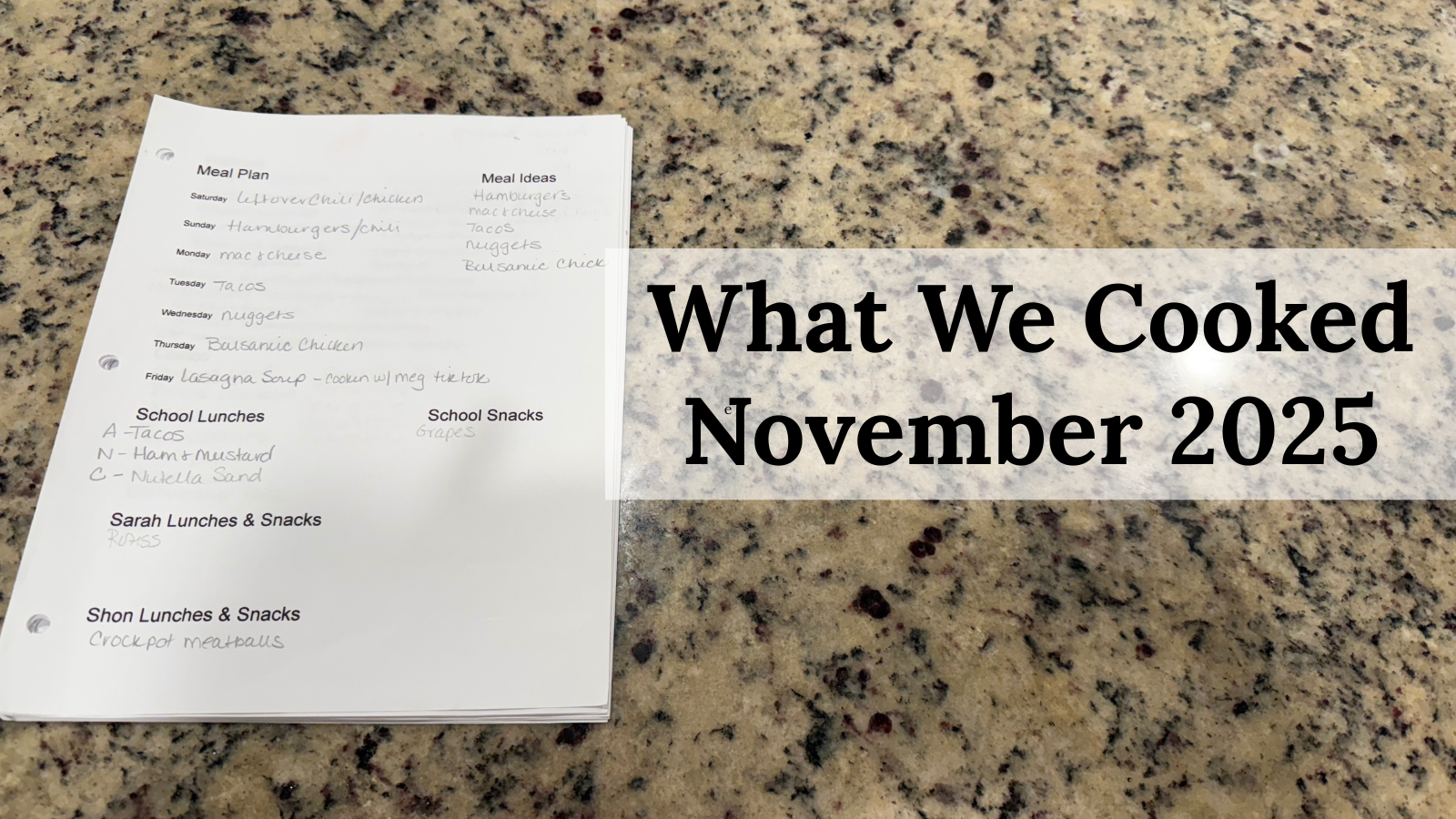
Pin now to save for later!
Quick Answer
In November 2025, I meal planned for a family of five using a simple weekly planning system instead of strict recipes. I rotated easy dinners, reused grocery staples, and adjusted plans week-to-week based on energy, leftovers, and real life. This post breaks down what we actually cooked, how I planned it, and how I kept grocery shopping manageable.
This post contains affiliate links. I may earn a small commission on purchases at no extra cost to you. A few of the images were created with AI tools, because I’m a real mom on a real budget, doing my best to make it all look pretty.
Share this post:




How This Post Is Organized
This post walks through what we actually cooked in November 2025, how I meal planned week to week, and how I adjusted when real life changed the plan. You’ll see real weekly meal plans, grocery notes, and how I kept shopping manageable for a family of five.
How I Meal Plan for a Family of 5
I meal plan every Saturday using a simple weekly template instead of strict recipes. I rotate easy dinners, reuse grocery staples, and plan intentionally for leftovers and low-energy nights. The goal is consistency and flexibility, not perfection.
The Weekly Meal Planning System I Use
This is the same simple system I use every week and the same one I’m sharing in this post.
One weekly meal plan page
One grocery list based on what we actually eat
No strict recipes, just repeatable meals
Built-in flexibility for leftovers and schedule changes
You’ll see exactly how I used this system throughout November below.
What We Cooked in November 2025
Below is a real look at what we actually cooked in November 2025. This isn’t a perfect plan or a curated menu. It’s the meals that got made while feeding a family of five, working around leftovers, energy levels, and real-life schedule changes.
Here’s how this section is organized:
Weekly meal plan snapshots (what I planned vs. what actually happened)
Simple dinner rotations we leaned on
Notes on leftovers, swaps, and skipped meals
Grocery patterns that kept shopping manageable
Week 1 Meal Plan (Early November)
This was the first full week of November and a pretty typical week for us, nothing fancy, just dinners that fit our schedule and energy.
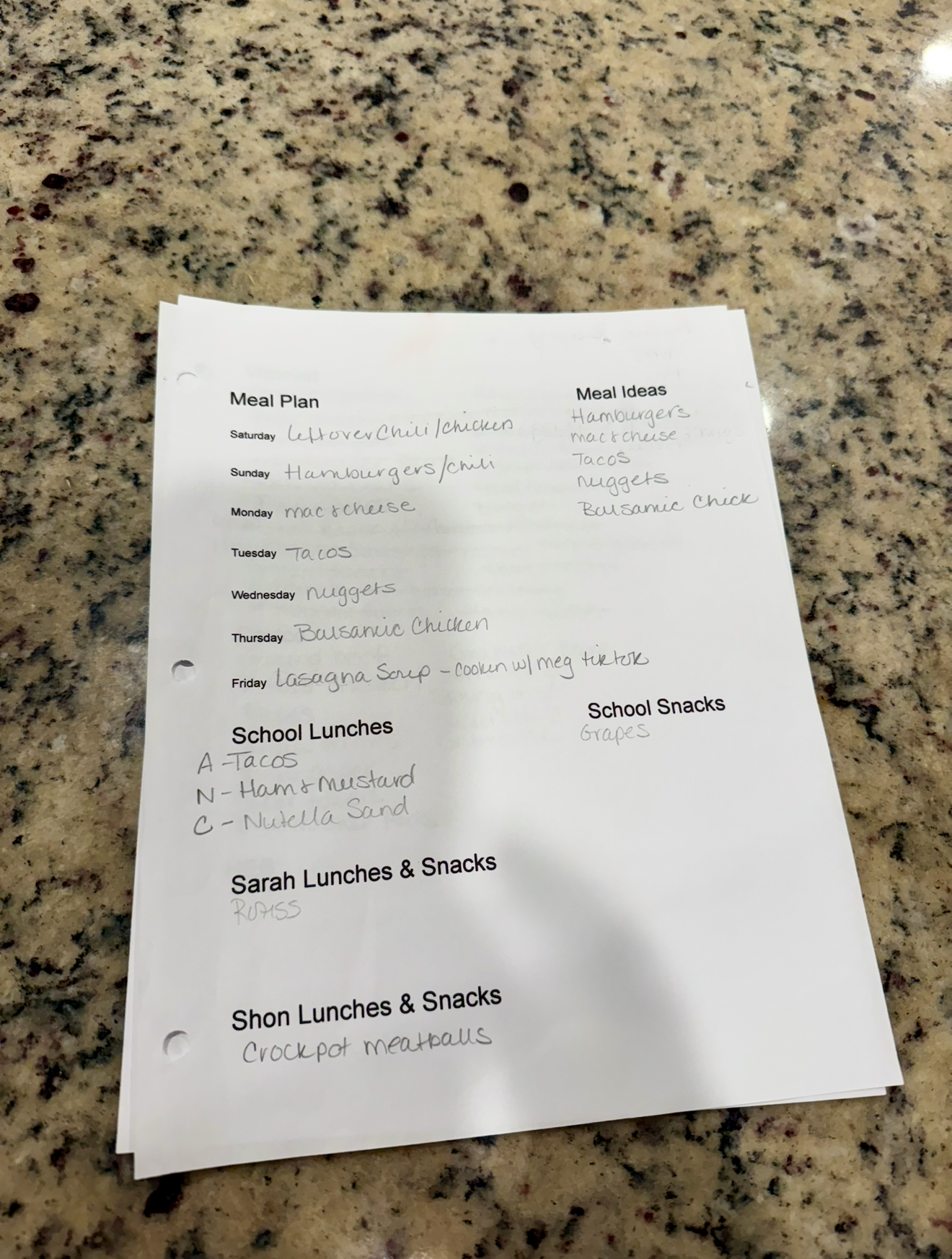
We mostly stuck to this plan, but a couple of nights shifted based on leftovers and how the week felt. Some meals got pushed, one night became leftovers, and nothing was cooked exactly on the day it was planned, which is normal for us, but we had a plan and didn’t plan to fail.
This week reminded me why I plan dinners loosely instead of by strict dates. Having meals written down gave me options without locking me in.
Week 2 Plan
Week 2 wasn’t perfectly executed, but it worked. Meals moved, leftovers carried us through a couple nights, and everyone got fed.
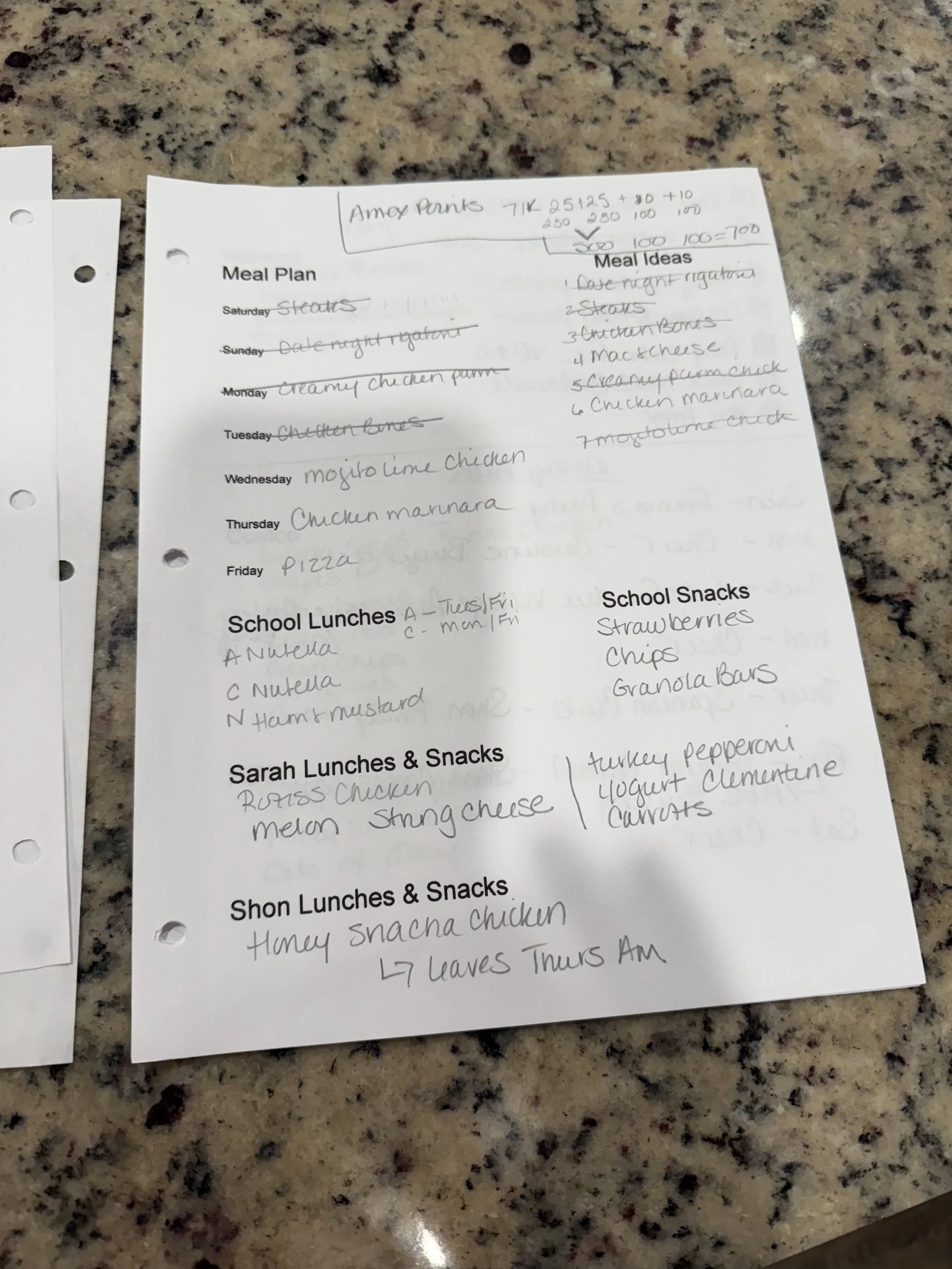
Week 2 wasn’t perfectly executed, but it worked. Meals moved around, leftovers filled a few gaps, and a couple of nights were simpler than planned. Having everything written down meant I could adjust without starting over.
Week 3: The Pre-Thanksgiving Shift Week
This was the week before Thanksgiving, which meant energy was lower and flexibility mattered more than variety. I planned simple, familiar meals and left room for leftovers, knowing that grocery trips, schedules, and mental bandwidth were already stretched.
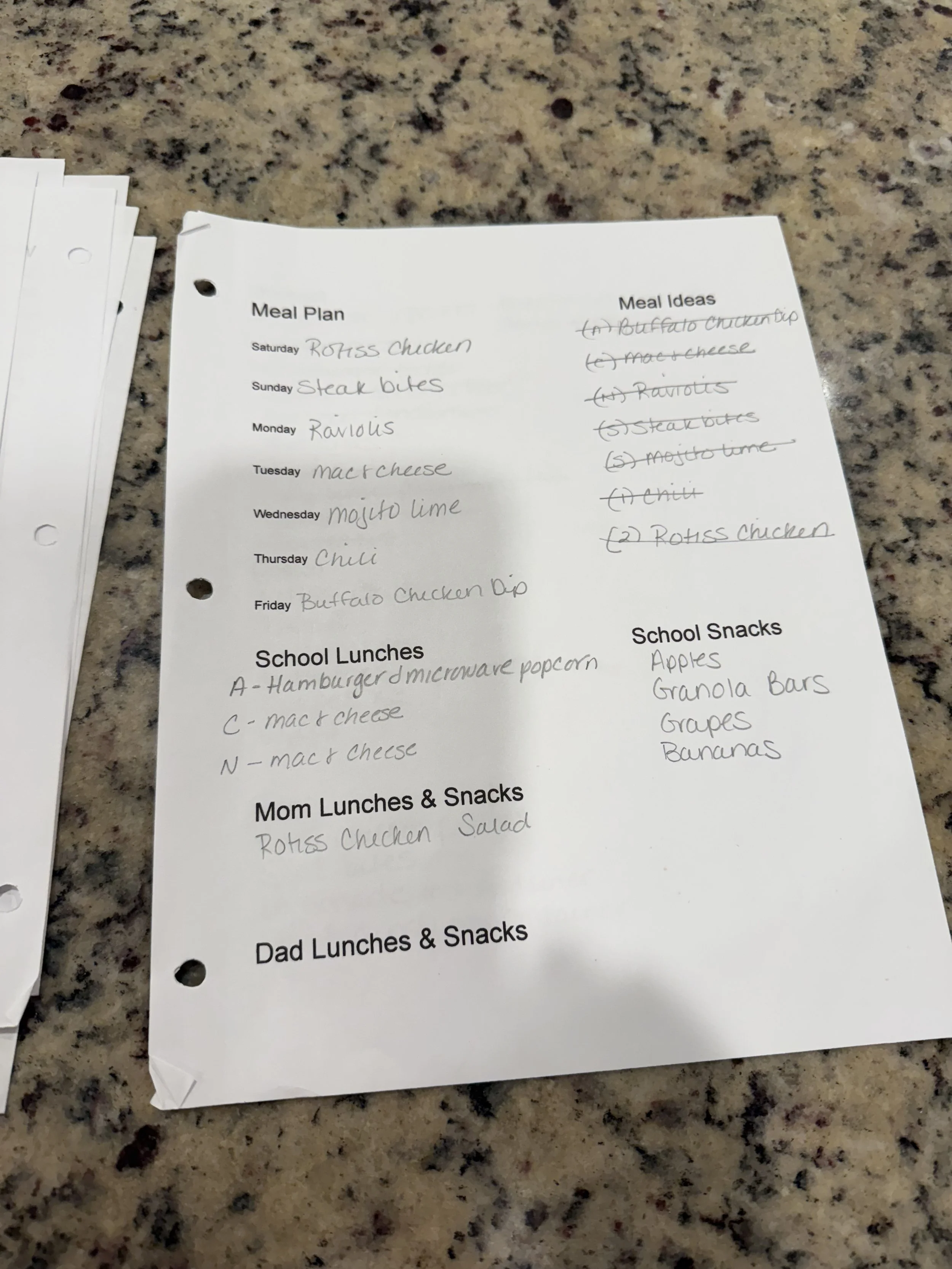
This week leaned heavily on rotisserie chicken, easy comfort meals, and a couple of low-effort dinners. Some meals repeated, one night became chili, and nothing required extra planning. Having everything written down made it easy to adjust without adding stress during an already busy week.
Week 4: Thanksgiving Week (Plans Shifted, Priorities Didn’t)
Thanksgiving week never looks like a normal week for us, and I don’t try to force it to be. I still wrote out a loose plan so I wasn’t starting from zero, but I knew most of our energy and food decisions would revolve around the holiday itself.
This week was about holding space for flexibility while still having something written down to fall back on.
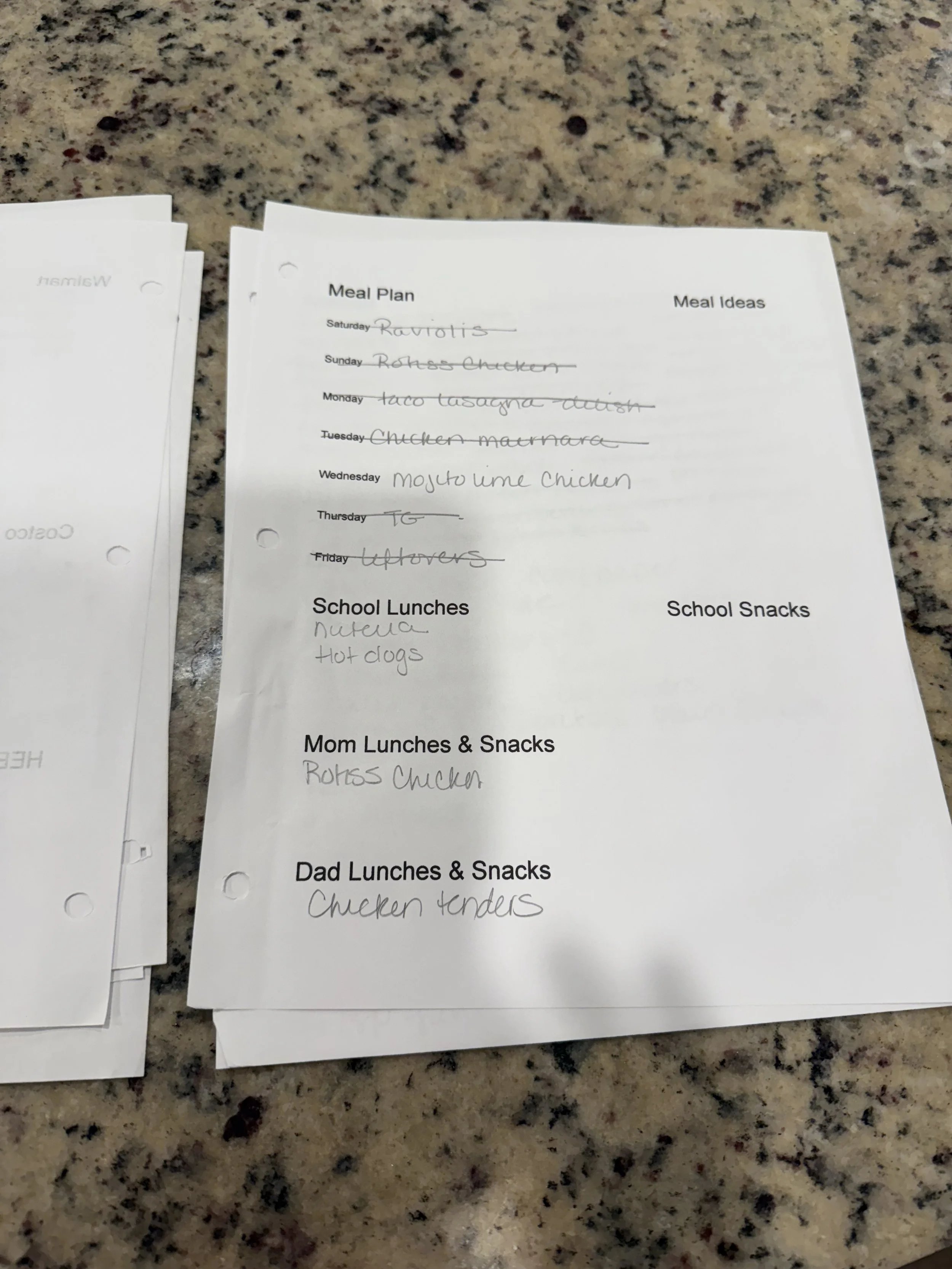
You’ll notice several meals crossed out or simplified. That wasn’t a failure of planning, it was the plan working as intended. Writing meals down ahead of time meant I could adjust without stress, reuse ingredients, and avoid unnecessary grocery trips during an already busy week.
Thanksgiving Meal Plan (What We Actually Made)
Instead of trying to reinvent Thanksgiving every year, I wrote out exactly what we were making and what ingredients were needed, nothing fancy, just clear. This helped me shop once, prep calmly, and avoid last-minute scrambling.
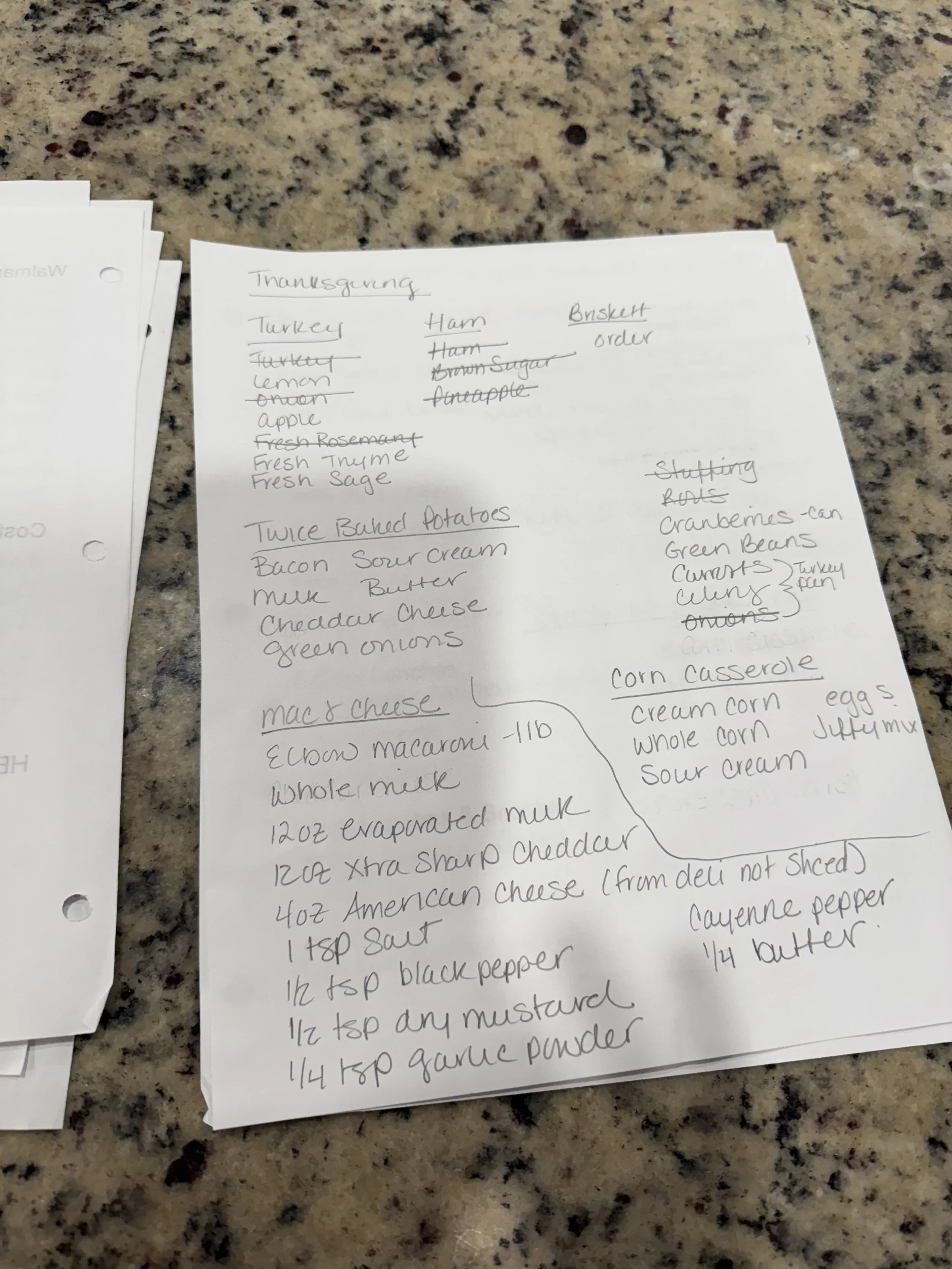
Having this written out kept Thanksgiving manageable. I wasn’t guessing quantities, doubling recipes unnecessarily, or forgetting ingredients. It also made leftovers easier to plan around the rest of the week, which is why the days after Thanksgiving stayed intentionally light.
This week reinforced why I don’t separate “holiday planning” from regular meal planning — it’s all the same system, just applied with different priorities.
November Patterns I Noticed
November wasn’t a “normal” month in our house, and that’s exactly why this meal planning system mattered.
During this month:
My kids changed schools due to a safety issue at their previous school
My parents were in town visiting for most of the month
I attended 10 networking events
My son had soccer, and I am assistant coach for my girls’ cheer team
There was noticeable growth in this little blog
Continued running my business and managing my team
In other words, this wasn’t a low-stress season.
Here are the patterns that stood out as I looked back at what we actually cooked.
1. Simple Meals Carried the Month
The meals that showed up over and over weren’t complicated:
Rotisserie chicken
Pasta and mac & cheese
Chili
Nuggets and quick protein options
These weren’t “fallbacks.” They were intentional anchors that made everything else possible.
2. Writing It Down Reduced Decision Fatigue
Even when meals changed, having them written down meant I wasn’t starting from scratch every night. I could scan the page, pick the lowest-effort option, and move on without overthinking.
That mattered more than perfect execution.
3. Flexibility Was the System, Not a Failure
Plans shifted almost every week, because real life shifted almost every week.
Leftovers replaced planned meals. Some nights became “use what we have” nights. Thanksgiving took over an entire week.
None of that broke the system. It proved it worked.
4. Grocery Shopping Stayed Manageable
Because meals were loosely planned and repeated, grocery trips stayed predictable. I wasn’t buying specialty ingredients “just in case,” and I wasn’t overspending trying to catch up after a busy week.
This mattered during a month where everything else demanded extra attention.
5. This System Supported Growth Outside the Kitchen
What surprised me most is how much mental space this freed up.
While food stayed simple, I was able to:
Show up consistently to events
Support my kids through big transitions
Keep momentum in my business and blog
Meal planning didn’t add pressure, it quietly removed it.
Pattern #1: Simple, Repeatable Meals Carried the Month
When life was loud, complicated meals didn’t stand a chance.
The meals that actually got made were the ones we already knew how to cook, didn’t require extra brainpower, and could flex based on energy levels. Rotisserie chicken, mac and cheese, ravioli, chili, steak bites, nothing fancy, nothing new.
This wasn’t a failure of planning. It was the point.
Having a short list of familiar meals meant we weren’t starting from zero every night. Even when days shifted, the decision-making stayed simple.
Pattern #2: Planning Loosely Prevented the “We Failed” Spiral
Very few meals were cooked on the exact day they were written down.
Some nights shifted. Some meals became leftovers. Some plans got skipped entirely. And none of that meant the system didn’t work.
Because the goal was never perfection, it was options.
Writing meals down ahead of time gave me something to pull from when the day didn’t go as planned. We had a direction without being boxed in, which mattered in a month where almost nothing else was predictable.
Pattern #3: Dinner Planning Reduced Stress More Than It Saved Time
This month wasn’t about saving time, it was about reducing friction.
Between school changes, family visits, sports schedules, work growth, and constant movement, the last thing I needed was to decide what was for dinner from scratch every night.
Having meals written down removed one decision from already-full days. Even when plans changed, the mental load stayed lighter because the thinking had already been done.
That alone made the system worth keeping.
Pattern #4: Thanksgiving Week Was Its Own Category (and That Was Necessary)
Thanksgiving week didn’t follow the same rules as the rest of the month, and it wasn’t supposed to.
Meals were simpler earlier in the week, planning shifted toward the holiday itself, and energy went into cooking one big meal instead of multiple small ones. There were leftovers, skipped dinners, and fewer expectations overall.
Trying to treat Thanksgiving week like a standard week would have created unnecessary stress. Letting it stand alone made the rest of the month easier to manage.
This was a good reminder that some weeks need a different kind of plan, not a tighter one.
Why I’ll Keep Planning This Way
Looking back at November, what stands out most isn’t the specific meals, it’s how much mental space this planning system saved.
Even during a month that included school changes, family visits, packed schedules, and a lot of emotional bandwidth being used elsewhere, we were still fed. Not perfectly. Not always on schedule. But consistently.
This way of planning worked because:
I wasn’t locked into strict dates
Meals could shift without feeling like a failure
Grocery shopping stayed manageable
I always had options written down, even on low-energy days
Instead of asking, “What am I making tonight?” every day, I was asking, “Which of these already-planned options fits today?” That small shift made a big difference.
I don’t need a new system every month. I need one that holds up when life gets messy, and this one does.
That’s why I’ll keep planning this way going forwar
This post is a real example of how I use my meal-planning and grocery-tracking template week to week. If you want a copy of the same system, you can download it below
TL;DR
In November, I meal planned for a family of five using a flexible system instead of strict recipes or dated schedules. Even during a high-stress month with school changes, travel, sports, and work, we relied on simple, repeatable meals, adjusted as needed, and avoided starting over each week. Planning loosely helped us stay fed without adding more pressure.
Final Thoughts
This month reminded me that meal planning doesn’t need to be another thing to “get right.” It just needs to support the season you’re in.
We didn’t follow a perfect plan in November, but we stayed fed, adjusted when life changed, and didn’t lose momentum. That’s the goal for me, systems that bend instead of break when real life shows up.
If you’re in a busy season too, planning loosely might be exactly what helps you keep going.
Share this post: