How I Meal Plan for a Family of 5 (Without Strict Recipes or Schedules)
Pin now to save for later!
Quick Answer
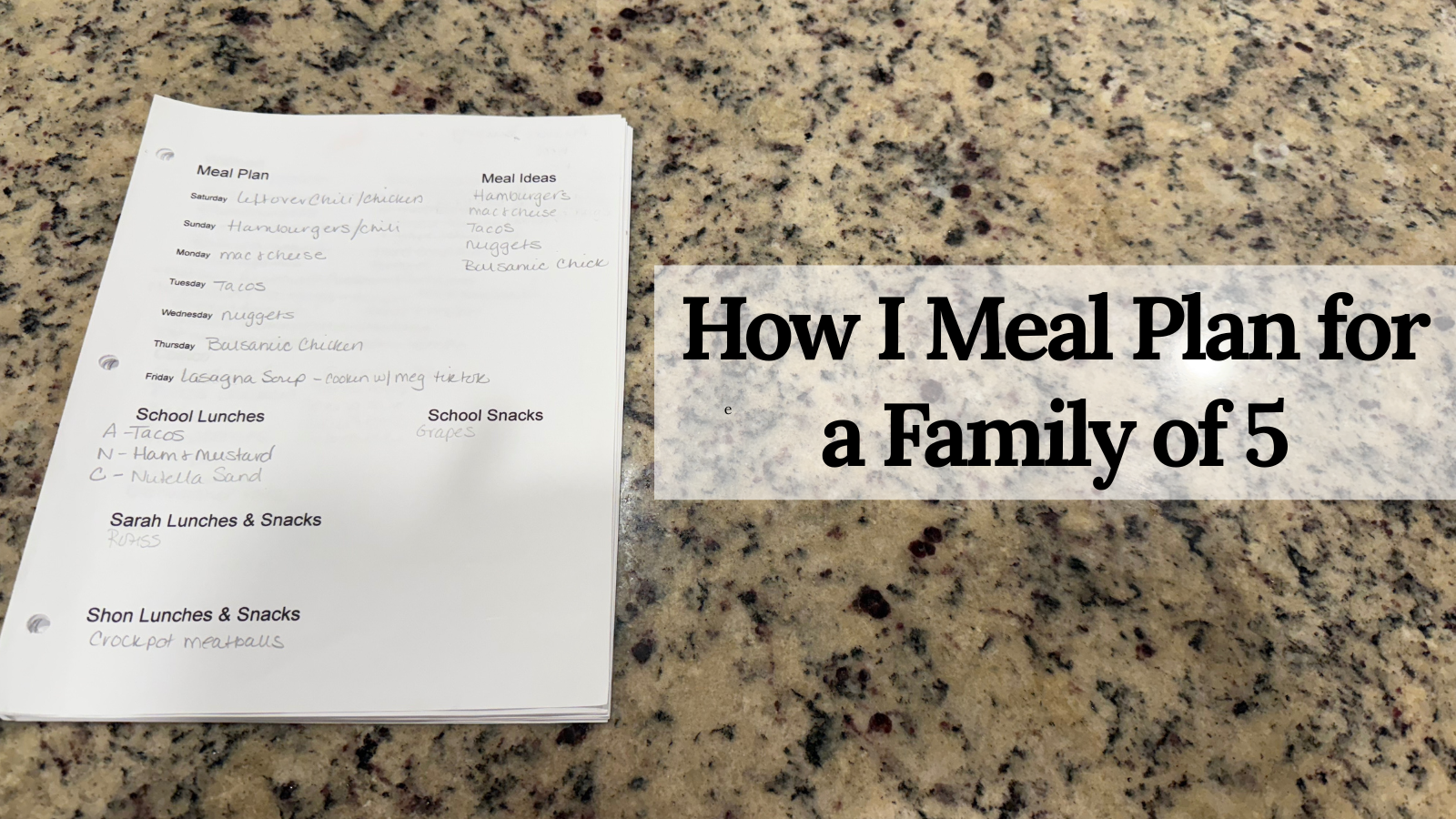
I meal plan for a family of five by planning flexibly, not perfectly. Instead of assigning rigid meals to specific days, I plan a short list of dinners, stock repeatable lunches and snacks, and leave room for real life to happen. This approach keeps us fed without burnout—and works especially well during busy seasons.
Why I Don’t Use Traditional Meal Plans Anymore
For a long time, I tried to meal plan the “right” way:
recipes picked in advance, meals assigned to days, grocery lists locked in.
It always looked good on paper—and then completely fell apart by Wednesday.
Between running a business, managing a household, kids’ schedules, and prioritizing my health, I needed a system that could bend without breaking. Strict plans didn’t survive real life.
So I stopped planning by the calendar and started planning by reality.
My Flexible Meal Planning System (What Actually Works)
Here’s how I meal plan now—and why it’s sustainable.
1. I Plan Meals, Not Days
I choose a short list of dinners for the week, but I don’t assign them to specific nights. This lets me cook based on energy, schedule changes, or leftovers—not guilt.
This is the same “plan once, adapt as needed” philosophy I use in other areas of my life, including how I’ve started using ChatGPT as part of my fitness system instead of following rigid training plans. (More on that here: ChatGPT Is My Trainer.)
2. I Repeat Lunches and Snacks on Purpose
Breakfasts, lunches, and snacks are intentionally boring—and that’s a feature, not a flaw.
Repeats make grocery shopping faster, reduce decision fatigue, and keep costs predictable. When the basics are handled, dinners feel easier.
If you want examples of what this looks like in real life, I’ve shared:
Cheap high-protein lunch ideas that actually work for busy weeks
Simple high-protein snacks for busy moms that don’t require prep marathons
(Those posts show exactly how I keep food simple without sacrificing nutrition.)
3. I Grocery Shop Based on Patterns, Not Aspirations
I don’t shop for who I want to be. I shop for who we actually are.
That means buying ingredients we reliably use, repeating proteins and produce we finish, and leaving space to adjust mid-week instead of forcing a reset.
This is the same mindset that guided how I planned meals during a particularly chaotic month, which I documented in What We Cooked in November 2025—a real look at how flexible planning holds up under pressure.
How This Meal Planning Style Supports My Health Goals
One unexpected benefit of flexible meal planning is how well it supports consistency elsewhere—especially fitness.
When meals are predictable and manageable:
I’m less likely to skip workouts due to decision fatigue
I don’t feel like I’m constantly “starting over”
My energy stays more stable week to week
That’s a big reason this system pairs so well with my current fitness approach, where I’m using ChatGPT to help me build a training plan that adapts to real life instead of collapsing when things get busy.
The systems reinforce each other.
Who This Meal Planning Method Is Best For
This approach works especially well if you:
Feed multiple people with different preferences
Get overwhelmed by overly detailed meal plans
Are tired of wasting groceries
Want consistency without rigidity
Need systems that survive busy seasons
If that sounds familiar, you don’t need a new recipe—you need a better framework.
Why I’m Sticking With This Going Forward
I’m not interested in meal planning systems that only work in calm seasons.
This one works when:
Schedules change
Energy fluctuates
Life gets loud
That’s why I’m continuing to use it—and why it fits seamlessly into the larger systems I’m building around food, fitness, and day-to-day life.
TL;DR
I meal plan for a family of five by planning flexibly instead of assigning strict meals to days. I repeat lunches and snacks, grocery shop based on real patterns, and leave room to adjust when life changes. This approach saves time, reduces stress, and supports consistency—especially during busy seasons.
What’s Coming Next
Next, I’ll be sharing:
How I pair this meal planning system with weekly training
Real-life Week 1 fitness + food recaps once those printouts exist
More evergreen food systems that support long-term consistency
You can read the foundation of my fitness approach here: ChatGPT Is My Trainer.
Share this post: